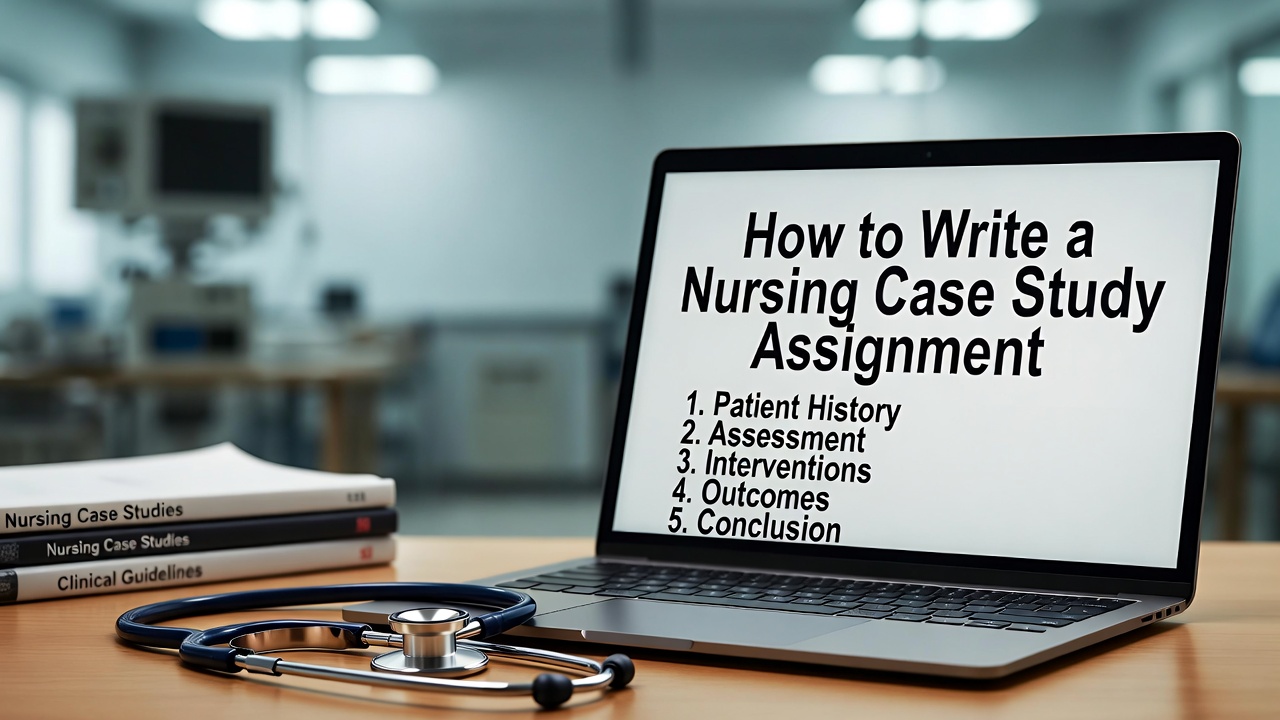
Nursing students in the USA often struggle with how to write nursing assignment USA, especially complex case studies. This comprehensive guide shows you step-by-step how to write a nursing case study assignment that meets US college standards — from patient assessment and nursing diagnoses to interventions and evaluation. Whether you're in BSN, MSN, or DNP programs, mastering nursing case study assignment help techniques will improve your critical thinking, APA formatting, and grades. Follow this proven process to create clear, evidence-based case studies that impress instructors and prepare you for real-world nursing practice. (138 words)
Ready to build a strong nursing case study? Start with understanding the purpose and structure — or skip the stress and get expert support for your next deadline.
A nursing case study assignment is a detailed analysis of a real or hypothetical patient scenario that requires students to apply theoretical knowledge to clinical practice. In US nursing programs (BSN, MSN, DNP), these assignments simulate real-world decision-making, helping students develop critical thinking, clinical judgment, and evidence-based care skills. They are core assessments in courses like Medical-Surgical Nursing, Pediatrics, Mental Health, and Community Health. Mastering how to write nursing assignment USA through case studies prepares you for NCLEX-RN success and professional practice. (124 words)
US nursing schools (accredited by CCNE or ACEN) mandate case studies to bridge theory and practice. They test your ability to assess, diagnose, plan, implement, and evaluate care using the nursing process (ADPIE). These assignments align with AACN Essentials and QSEN competencies, ensuring graduates are safe, competent, and patient-centered. They also prepare students for real hospital environments where quick, informed decisions save lives. Strong case studies demonstrate readiness for licensure and advanced roles. (118 words)
| Assignment Type | Focus | Key Difference from Case Study |
|---|---|---|
| Research Paper | Literature review & evidence synthesis | Broad topic, no patient-specific application |
| Care Plan | Nursing diagnoses & interventions | Shorter, less narrative; no full patient story |
| Reflective Essay | Personal experience & growth | Subjective, no clinical data analysis |
| Case Study | Holistic patient analysis + nursing process | Integrates assessment, diagnosis, planning, implementation, evaluation with evidence |
Still unclear on case study vs. other nursing assignments? Expert nursing case study assignment help USA clarifies and delivers custom examples.
Every strong nursing case study starts with thoroughly understanding the prompt and rubric. US professors provide detailed instructions—read them multiple times. Rubrics usually allocate points for assessment, diagnosis, planning, interventions, evaluation, APA formatting, and critical thinking. Knowing expectations early prevents rework and ensures you cover all required elements for top marks. (108 words)
Most US nursing case studies require: patient demographics, chief complaint, history of present illness, past medical history, medications, allergies, head-to-toe assessment, vital signs, lab/diagnostic results, nursing diagnoses (NANDA-I), goals/outcomes (NOC), interventions (NIC), evaluation, patient teaching, and references. Length varies (5–15 pages). Always check word count, deadline, and submission format (e.g., Turnitin). (114 words)
Nursing programs in the USA almost always require APA 7th edition. Use 1-inch margins, double-spacing, 12 pt Times New Roman or 11 pt Calibri/Arial, page numbers top right, title page, running head only if professional paper (not student), in-text citations (Author, Year), and References page with hanging indent. Cite NANDA, NIC, NOC sources properly. Consistent APA boosts professionalism and avoids point loss. (118 words)
The foundation of any strong nursing case study is thorough data collection. This step mirrors real clinical practice—choose a case, gather subjective and objective data, and organize it logically. In US nursing assignments, accuracy here directly impacts the quality of diagnoses and interventions later. (102 words)
Use real clinical experiences (anonymized) or instructor-provided hypotheticals. Choose cases with complexity: multiple comorbidities, acute/chronic conditions, or psychosocial factors. Avoid overly simple cases unless specified. Ensure the scenario allows demonstration of the full nursing process. For example: a 68-year-old with COPD exacerbation and diabetes. (108 words)
Subjective data: patient's reported symptoms, history, concerns (chief complaint, HPI, past medical/family/social history). Objective data: measurable findings (vital signs, physical exam, labs, imaging, medications). Use reliable sources (EHR simulation, case packet). Organize clearly to support later analysis. (104 words)
Gordon’s 11 Functional Health Patterns is popular in US programs for organizing data: Health Perception-Management, Nutritional-Metabolic, Elimination, Activity-Exercise, Sleep-Rest, Cognitive-Perceptual, Self-Perception, Role-Relationship, Sexuality-Reproductive, Coping-Stress, Value-Belief. Alternatives include Orem’s Self-Care or Roy’s Adaptation Model. Choose the framework your course emphasizes. (112 words)
Finding it hard to gather or organize patient data for your case study? Reliable nursing case study assignment help USA provides structured, accurate data collection and analysis.
After assessment and diagnosis, planning turns data into actionable care. This step involves setting clear goals and selecting evidence-based interventions. In US nursing programs, professors expect plans linked to NANDA-I diagnoses, NIC interventions, and NOC outcomes. A strong plan shows critical thinking and patient-centered focus — key to high grades on nursing case studies. (108 words)
Goals must be SMART: Specific, Measurable, Achievable, Relevant, Time-bound. Link them to NOC indicators (e.g., "Patient will demonstrate improved mobility within 48 hours as evidenced by walking 50 feet with walker"). Expected outcomes are observable and realistic. For each nursing diagnosis, include short-term and long-term goals. This structure proves your plan is logical and trackable. (114 words)
Select NIC interventions that directly address the diagnosis (e.g., "Exercise Therapy" for impaired mobility). Justify each with evidence (cite sources like nursing textbooks or guidelines). Link to NOC outcomes for measurement. In US assignments, show why the intervention is best practice and how it promotes patient safety. (102 words)
Patient teaching is mandatory: cover medication, diet, activity restrictions, warning signs. Use teach-back method and culturally sensitive language. Safety measures include fall prevention, infection control, medication reconciliation. Document rationale and expected patient understanding. This shows holistic, preventive care — highly valued in US nursing education. (108 words)
Planning interventions taking too long? Get expert nursing case study planning help USA with SMART goals and evidence-based NIC/NOC linkages.
Implementation brings the plan to life; evaluation checks if it worked. In nursing case studies, describe what was done, patient response, and revisions. This step demonstrates accountability and reflective practice — essential for US nursing programs and NCLEX preparation. (102 words)
Detail actions taken (e.g., administered medication, taught deep breathing, assisted ambulation). Include time, dosage, patient response, and why each step was chosen (evidence-based rationale). Use objective language and include any barriers encountered. Accurate documentation mirrors real EHR charting. (108 words)
Compare actual outcomes to expected NOC indicators. State if goal was met, partially met, or unmet. If unmet, explain why and propose revisions (new interventions or adjusted goals). Evaluation shows critical thinking — highlight what you learned about the patient or care process. (104 words)
Include a short reflection: What went well? What would you change? How did this case improve your clinical judgment? Connect to QSEN competencies (safety, evidence-based practice). This section often earns extra points in US rubrics as it shows self-awareness and growth. (102 words)
Implementation or evaluation sections challenging? Professional nursing case study implementation help USA ensures accurate documentation and strong evaluation.
Now compile everything into a cohesive report. Follow a clear structure, maintain professional tone, and apply APA style. Good writing makes your clinical reasoning shine and helps instructors see your thought process. (102 words)
Typical US format: Title Page, Introduction (patient overview), Assessment Data, Nursing Diagnoses, Planning (goals/interventions), Implementation, Evaluation, Conclusion/Reflection, References. Use headings (APA levels), tables for data, appendices for extras. Length usually 8–15 pages. (108 words)
Write objectively (avoid "I" unless reflecting), use third person, precise language. Cite every claim (textbooks, guidelines, journals). Follow APA 7th strictly. Proofread for grammar, flow, and plagiarism. Use active voice where appropriate for clarity. (102 words)
Writing the full report overwhelming? Expert nursing case study writing help USA delivers clear, APA-perfect reports tailored to your rubric.
Use this template as a starting point — customize to your case and rubric. It follows standard US nursing school expectations. (102 words)
Finish strong with good time management and thorough proofreading. If overwhelmed, seek help early — it's common in demanding US nursing programs. These final tips ensure top-quality submissions. (102 words)
Seek help if: deadline is tight, case is complex, English is not first language, repeated low grades, or overwhelmed by workload. Professional services provide custom, original, APA-perfect case studies while teaching through examples. It's a smart investment in your success. (108 words)
Get custom, plagiarism-free, APA-compliant case studies delivered on time.
Order Your Nursing Case Study Now